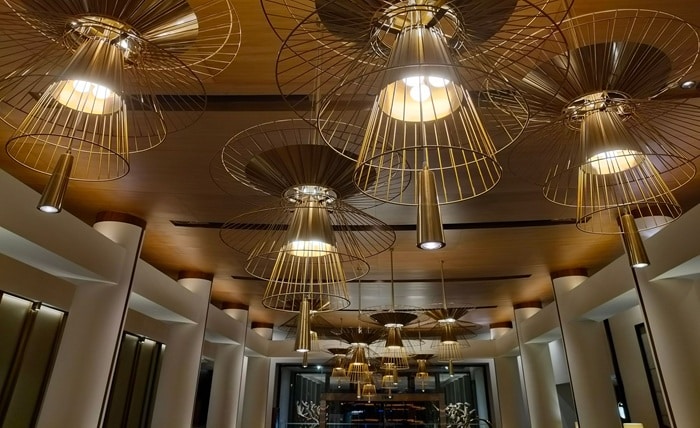
Let’s be real—walk into a hotel, and the first thing you feel (even before you notice the marble or the art) is the light. Is it harsh and clinical? Warm and inviting? Does it make you want to linger in the lobby bar or hurry straight to your room? That’s not an accident. Lighting is the silent mood-setter of hospitality—it shapes how guests experience a space from the second one, without moving a single piece of furniture.
And here’s the thing: it’s not just about picking pretty fixtures. A hotel lighting manufacturer who gets their craft knows they’re engineering an atmosphere—not just selling lamps. They’re balancing how a space looks with how it works all day, every day, for hundreds of guests.
Why Lighting Is the Secret Sauce in Hotel Design
Think about it: you can swap out sofas or repaint walls, but lighting? It’s the ultimate shape-shifter. The same lobby can feel like a bustling café at 8 a.m., a serene retreat at noon, and a glamorous cocktail lounge by 8 p.m.—all thanks to how the light changes. That power to transform a room’s character without altering its bones is why lighting deserves way more than an afterthought in design.
The Illuminating Engineering Society’s ANSI/IES RP-9-23 guideline lays it out clearly: hospitality lighting works best as a layered system, not a random scattering of pretty lights. Think of it like cooking—you need the right balance of flavors. Here’s how those layers typically play out in a hotel:
- Task lighting: The useful assistant. This is what you want for reading in bed, putting on make-up at the vanity, or chopping herbs in the hotel kitchen – focused, glare-free and right where the action is.
- Accent lighting: The drama queen. It’s what makes artwork pop, highlights a textured stone wall, or draws the eye to a stunning staircase—subtle but intentional.
- Decorative lighting: The personality injector. This is where the wow lives—think statement chandeliers, sculptural pendants, or artistic sconces that say, “This place has style.”
Skip one of these layers, and the space feels off—either flat and boring, or like you’re under interrogation lights. Get them working together? Suddenly, the hotel doesn’t just look luxurious; it feels luxurious, intuitively and comfortably.
Why Statement Chandeliers Still Matter (Spoiler: It’s Not Just About Bling)
Yeah, a massive crystal chandelier in a grand lobby or ballroom is a showstopper—but the best ones do heavy lifting beyond “look at me.” Take a French Empire crystal chandelier, for example. It’s not just sparkling for sparkle’s sake. In a space inspired by classical European design, its traditional form echoes architectural details (think fluted columns or ornate moldings), while those countless crystal facets throw light and shadows across ceilings and walls in a way that makes the whole room feel alive and dimensional.
But—and this is critical—it still has to work. A manufacturer worth their salt won’t let beauty override function. They’ll make sure:
- The chandelier’s size matches the room (nothing worse than a tiny fixture drowned in a vast foyer or a beast that overwhelms a cozy dining space).
- It provides enough actual light for the area (no point in a stunning centerpiece that leaves guests stumbling in the dark).
- It’s designed to minimize glare (because nobody wants to be blinded while trying to enjoy afternoon tea).
- It plays nice with the room’s dimensions and electrical setup—because installing a 500-pound crystal beast in a ceiling that can’t support it? Yeah, that’s a hard no.
The Real-World Dance: Working With a Hotel Lighting Manufacturer
Here’s where theory meets reality: hotel lighting isn’t just about picking fixtures from a catalog. A top-tier manufacturer becomes a true partner early in the process—think during architectural planning, not after the walls are up. Why? Because so much affects lighting needs:
- Which way the building faces (hello, harsh afternoon sun vs. soft morning light).
- How tall the ceilings are (a 12-foot lobby needs different treatment than an 8-foot corridor).
- How much natural light filters in during the day (big windows mean less reliance on artificial light—but also potential glare issues).
- The building’s very shape (curves, angles, nooks—they all change how light travels).
Getting the lighting designer and manufacturer involved early saves headaches later. Imagine trying to route heavy electrical conduits for a massive chandelier after the ceiling’s poured concrete—or realizing too late that the maintenance crew can’t access the fixture to change a bulb without scaffolding that shuts down the lobby for days. Early coordination means thinking through:
- How the fixture will actually be mounted (is the structure strong enough?).
- Where the wiring runs and how it connects to controls.
- What kind of access the engineering team needs for cleaning or repairs (because let’s be honest—crystal attracts dust).
- How heavy the fixture is (safety first, always).
Energy Efficiency Doesn’t Have to Mean “Boring”
Let’s talk numbers: in commercial buildings like hotels, lighting can gulp down up to 40% of total energy use—yes, really, per Australia’s Department of Climate Change, Energy, the Environment and Water. That’s huge. But here’s the good news: efficiency and elegance aren’t enemies.
Take that Hilton Columbus Downtown project the U.S. Department of Energy highlighted: they swapped out over 3,700 compact fluorescent (CFL) downlights in guest rooms for LED versions—and boom, 50% less energy used for the same (or better) light quality. No weird buzzing, no flicker, just crisp, controllable light that guests actually prefer.
And the best part? You don’t have to sacrifice style to save watts. Manufacturers can tuck efficient LED sources into traditional-looking fixtures—think a crystal chandelier with hidden LED strips that mimic candlelight, or a brass wall sconce where the “bulb” is actually a tiny, dimmable LED chip. The look stays timelessly luxurious; the innards are 21st-century smart. It’s about having your cake and eating it too—ambiance and lower utility bills.
Controls and Dimming: The Invisible Maestro
Ever been in a hotel restaurant that’s blindingly bright at 7 p.m. when you’re trying for a romantic vibe? Or a guest room where the bedside light is either “on like a searchlight” or “pitch black” with nothing in between? That’s a controls fail. Good lighting controls aren’t just nice-to-have—they’re what let a space breathe and adapt to how people actually use it.
Think about it:
- A restaurant needs bright, energetic light for lunch service but a softer, warmer glow for dinner.
- Guest rooms need focused light for reading or working, but something soothing and dimmable for winding down to sleep.
- Even decorative fixtures like chandeliers often need to dial back during daylight hours (to avoid competing with sunshine) then come alive at night.
The key? Intuitiveness. If the housekeeping staff needs a manual and a PhD to adjust the ballroom lights for a wedding, or guests fumble with confusing panels beside the bed, it’s a problem. The best systems feel simple—think presets like “Morning,” “Dinner,” or “Night Mode” that staff can tap with one touch, or guest-room controls that are as easy as a phone dimmer switch. No jargon, no frustration—just light that does what you need, when you need it.
The Bottom Line
When a hotel lighting manufacturer does their job right, lighting stops being an afterthought and starts feeling like the heartbeat of the space. It’s not just about whether a chandelier is pretty (though hey, that matters)—it’s about how all the layers work together to make guests feel welcomed, comfortable, and intrigued the moment they step inside.
“The magic is when the lighting is integrated into the architecture from the beginning, not an afterthought added at the end. Maybe it’s a lobby with a historic style, dripping with old-world charm, or a guest room that’s sleek and contemporary, where every detail is in service of calm focus. Thoughtful lighting design ensures that the space doesn’t just look luxurious… it feels that way, intuitively and effortlessly, for every guest who walks through the door.