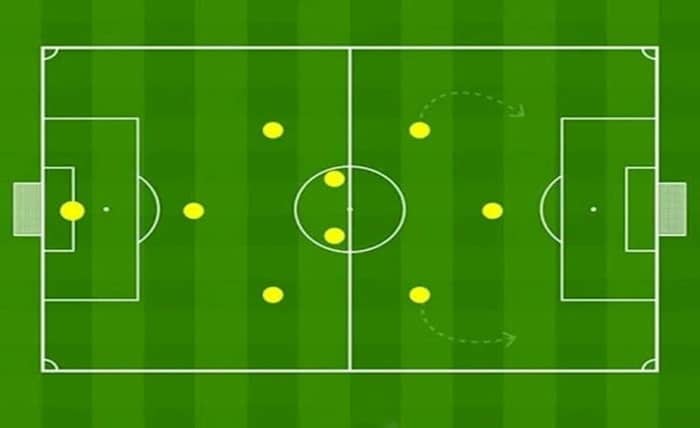
In modern football philosophy, people often say: “Attack wins you matches, but defense wins you titles.” If forwards are the artists who create moments of exhilaration through goals, defenders are the silent warriors who protect those achievements. However, the modern definition of a defender is no longer simply about clearing the ball or throwing themselves into tackles. Let’s explore what defenders are, their tactical evolution, and how they have transformed the face of elite football while following the action on Link Xoilac.
What Are Defenders in Football?
In international football terminology, defenders are players positioned in the lowest line of a team’s formation, directly in front of the goalkeeper. Their core responsibilities are to stop opposition attacks, protect the goal, and regain possession.
However, with the remarkable development of modern football, the role of defenders has evolved significantly:
- Not just defending: Modern defenders are among the first links involved in building attacks from the back.
- Contributing to attacks: Full-backs frequently push forward like wingers to deliver crosses or even take shots themselves.
- Reading the game: The ability to anticipate positioning and execute offside traps is far more important than simply relying on physical strength and tackles.
When watching thrilling matches on Xôi Lạc TV, you will easily realize that a good defender must not only know how to make precise tackles but also possess extremely intelligent footballing awareness.
Common Defender Positions in Tactical Formations
To better understand defenders, we need to classify them according to their specialized positions on the pitch:
Central Defender / Center-Back (CB – Central Defender)
This is the key component responsible for maintaining organization and commanding the entire defense. Center-backs are often physically strong and tall, with excellent aerial ability and sharp game-reading skills.
- Stopper: Frequently steps forward to close down opponents and engage in intense challenges to break up attacks at an early stage.
- Sweeper/Libero: Covers the space behind teammates, cleans up defensive mistakes, and distributes the ball toward the attacking line.
- Ball-Playing Defender: A modern type of center-back with excellent passing ability who is ready to play progressive long passes that can split open the opposition defense.
Full-Back (RB/LB – The Pair of Defenders Managing the Wide Channels)
They operate on both flanks (Right Back and Left Back). Their original responsibility was to stop opposing wingers, but today they require seemingly endless stamina to constantly contribute both defensively and offensively.
Wing-Back (RWB/LWB – Attacking Full-Back)
They typically appear in formations using three or five defenders, such as 3-5-2 or 3-4-3. Wing-backs operate like genuine wide players, covering the entire flank from defensive duties to supporting attacks.
Inverted Full-Back (Inverted Full-Back / Full-Back Moving into Central Areas)
This is a tactical trend that has exploded in recent years. Instead of staying wide and delivering crosses, full-backs move into central areas and operate like central midfielders when their team has possession, helping increase the number of players in midfield.
The center-back duo stays focused on covering for each other and stopping a dangerous opposition attack.
The Impact of Defense on the European Football Table Race
It is no coincidence that the world’s leading clubs are willing to spend record fees on elite defenders. A solid defense is one of the strongest foundations for sustained success.
The consistency of star center-backs and the attacking threat provided by full-backs can continually change the course of a match. Keeping clean sheets at crucial moments helps teams collect maximum points, creating major turning points on the bxh bong da chau au in fiercely competitive tournaments such as the Champions League, Premier League, and La Liga.
Clashes between world-class strikers and the world’s top defenders always provide tremendous appeal for viewers on Xoilac Tivi.
Qualities That Make an Excellent Modern Defender
Football is becoming increasingly demanding, and a world-class defender needs to possess a complete range of qualities:
- Spatial awareness and positioning: Helps provide effective cover and execute accurate offside traps.
- Ball control: Enables smooth pressing resistance under intense pressure from opponents.
- Fitness and speed: Provides the ability to track fast forwards throughout the full 90 minutes.
- Composure and mentality: Helps maintain concentration during dangerous and uncertain situations around the penalty area.
Conclusion
Hopefully, this article has helped you understand what defenders are and their strategic importance in modern football. Goals bring immediate joy, but the last-gasp saves and crucial defensive interventions from defenders are what truly demonstrate the mentality of a champion. Continue visiting Link Xoilac every day so you don’t miss elite clashes, stay updated with the latest football news, and immerse yourself in every thrilling heartbeat of world football!